



Starting your own business can be one of the most exciting things you can do in life. For women in India, there has never been a better time to become an entrepreneur. With government support, growing digital access, and changing social attitudes, more women are now starting their own businesses than ever before. This guide will help you find the perfect business idea that matches your skills, interests, and budget.
Why Women Entrepreneurs Are Growing in India
The business world in India is changing fast. More women are stepping out and creating their own companies. According to recent studies, about 18 percent of all startups in India are now led by women. This number has grown a lot in the past five years. The government has also created many special programs to help women start businesses, making it easier to get loans and support.
Women bring unique strengths to business. They are good at handling many tasks at once, understanding what customers need, and building strong relationships. These skills help them create successful businesses in many different areas. From food businesses to online services, Indian women are proving that they can succeed in any field they choose.
Top Low Investment Business Ideas for Women
Starting a business does not always need a lot of money. Many successful women entrepreneurs began with small amounts and grew their businesses over time. Here are some of the best business ideas that need low investment but can give you good returns.
Home Based Food Business

If you love cooking and people always praise your food, starting a home based food business can be perfect for you. This is one of the most popular businesses among women because you can start from your own kitchen and work at your own pace.
What You Can Do: You can make and sell homemade snacks, tiffin services, baked goods, pickles, jams, traditional sweets, or ready to eat meals. Many working people and students look for healthy homemade food, so there is always demand for good quality food.
Investment Needed: You can start with just 20,000 to 50,000 rupees. This money will cover basic kitchen equipment like containers, packaging materials, and ingredients. If you already have a good kitchen, you need even less money to start.
Expected Returns: You can earn 30,000 to 80,000 rupees per month depending on how many customers you serve. Profit margins in food business are usually 40 to 60 percent, which means if you sell food worth 10,000 rupees, you can keep 4,000 to 6,000 rupees as profit.
Pros:
- You can work from home and manage your time freely
- Low starting cost with equipment you already have
- High demand because everyone needs food every day
- You can start small and grow slowly
- Easy to get customers through word of mouth
Cons:
- Food safety and hygiene are very important
- Need proper licenses from FSSAI
- Working in the kitchen for long hours can be tiring
- Competition from other home cooks
- Managing delivery and timing can be challenging
How to Start: First, decide what kind of food you want to sell. Choose something you make really well. Get your FSSAI license, which proves your food is safe. Start with a few friends and family members as customers. Take their feedback seriously and improve your recipes. Use good quality ingredients always. Take nice photos of your food and share on social media. Ask happy customers to tell others about your food. Slowly increase your menu and customer base.
Boutique and Tailoring Business

Fashion never goes out of style in India. Women are always looking for unique clothes, good alterations, and custom designs. If you know how to stitch or design clothes, a boutique or tailoring business can be very rewarding.
What You Can Do: You can offer custom stitching, alteration services, designer blouses, ethnic wear, bridal outfits, or ready made clothing. Many women prefer custom made clothes that fit perfectly rather than buying from shops.
Investment Needed: Starting a small tailoring business needs about 50,000 to 1,50,000 rupees. This covers a good sewing machine, some fabric stock, threads, buttons, and other materials. If you work from home, the cost is much lower.
Expected Returns: Monthly earnings can be 40,000 to 1,50,000 rupees depending on your skill and customer base. Experienced designers who make bridal wear can earn even more. Your profit margin can be 50 to 70 percent after material costs.
Pros:
- Creative work that never feels boring
- High demand especially during wedding season and festivals
- Can work from home initially
- Good profit margins on designer pieces
- Regular customers come back many times
Cons:
- Competition from ready made clothes and big brands
- Need to keep up with fashion trends
- Dealing with difficult customers sometimes
- Managing delivery deadlines during busy seasons
- Initial investment in quality sewing machine
How to Start: Learn professional tailoring if you only know basic sewing. Take a course to improve your skills. Buy a good quality sewing machine. Start with simple alterations and basic stitching. Build a portfolio by making clothes for friends and family. Take before and after photos. Create social media pages showing your work. Keep your rates reasonable at first to get customers. Focus on quality and meeting deadlines. As you get more skilled, you can charge higher prices for designer work.
Beauty and Makeup Services

Every woman wants to look beautiful on special occasions. If you are good with makeup, hairstyling, or beauty treatments, this business can be very profitable. The beauty industry in India is growing fast, and skilled professionals are always in demand.
What You Can Do: You can offer makeup for weddings and parties, hairstyling, mehendi application, facial treatments, threading, waxing, or even start a small beauty parlor. You can work at clients homes or have them come to your place.
Investment Needed: Starting as a freelance makeup artist needs about 30,000 to 80,000 rupees for professional makeup products and tools. Opening a small beauty parlor at home needs 1,50,000 to 3,00,000 rupees for equipment and products.
Expected Returns: Makeup artists can earn 25,000 to 1,00,000 rupees per month. During wedding season from October to March, earnings can be much higher. A small beauty parlor can generate 50,000 to 2,00,000 rupees monthly.
Pros:
- Growing demand especially during wedding season
- Good earnings from single events like weddings
- Can build loyal customer base
- Creative and satisfying work
- Flexible working hours
Cons:
- Very competitive field with many professionals
- Need to constantly update skills and learn new techniques
- Investment in quality products is necessary
- Physical work that needs stamina
- Managing bookings during peak season can be stressful
How to Start: Get professional training from a good institute. Practice on friends and family. Build a portfolio with photos of your work. Get certified courses to add credibility. Start with small events and parties. Give special rates to first few customers for good reviews. Create Instagram and Facebook pages showing your before and after work. Network with wedding planners and photographers. Keep learning new trends by watching tutorials. Invest in good quality products slowly as you earn.
Online Tutoring and Coaching Classes

If you are good at teaching and have knowledge in any subject, online tutoring is an excellent business idea. After the pandemic, online education has become very popular. Parents are comfortable with their children learning online, and many working adults also want to learn new skills.
What You Can Do: You can teach school subjects like math, science, and languages. You can also teach specialized skills like English speaking, competitive exam preparation, music, dance, yoga, art, or even coding for kids. The options are endless based on your expertise.
Investment Needed: This is one of the lowest investment businesses. You need just 10,000 to 30,000 rupees for a good internet connection, a laptop or computer, a webcam, and a microphone. Some teaching platforms are free to use.
Expected Returns: You can earn 20,000 to 80,000 rupees per month depending on how many students you teach and your rates. Experienced teachers with good reviews can charge 500 to 2000 rupees per hour.
Pros:
- Very low investment to start
- Work from home comfort
- Flexible timing that you can control
- Can teach students from anywhere in India or abroad
- No physical space needed
- Easy to scale up by teaching more students
Cons:
- Need good internet connection always
- Competition from many online teachers
- Building initial student base takes time
- Technical problems can disturb classes
- Parents expect very high quality teaching
How to Start: Decide which subject or skill you want to teach. Create a simple study plan for your course. Register on platforms like Vedantu, Unacademy, or start independently. Create a professional profile with your qualifications. Offer free demo classes to attract first students. Keep your rates competitive initially. Ask parents for feedback and reviews. Be regular and punctual always. Create engaging lessons with examples. Share study materials after class. As you get good reviews, you can increase your rates.
Handmade Products and Crafts

India has a rich tradition of handicrafts. If you are creative and like making things with your hands, selling handmade products can be both fun and profitable. There is growing demand for unique handmade items, especially online.
What You Can Do: You can make and sell candles, soaps, home decor items, jewelry, greeting cards, gift hampers, paintings, embroidered items, or traditional crafts. Choose something that you enjoy making and that has good market demand.
Investment Needed: Starting with handmade products needs about 15,000 to 50,000 rupees. This covers raw materials, tools, packaging, and initial marketing. The exact amount depends on what product you choose to make.
Expected Returns: Monthly earnings can range from 20,000 to 80,000 rupees. During festival seasons like Diwali and Christmas, sales can increase a lot. Profit margins are usually 50 to 70 percent.
Pros:
- Creative and enjoyable work
- Can work from home at your own pace
- Low investment to start
- Good demand during festivals and wedding season
- Can sell online to reach more customers
- Each piece is unique and special
Cons:
- Making each item takes time
- Hard to scale up quickly
- Storage space needed for materials and finished products
- Finding consistent customers takes effort
- Competing with cheap machine made products
How to Start: Learn the craft properly through YouTube videos or short courses. Practice until you can make really good quality products. Start with small batches to test the market. Take beautiful photos of your products with good lighting. Create accounts on Etsy, Instagram, and Facebook. Price your products fairly covering time and materials. Participate in local exhibitions and craft fairs. Ask happy customers to refer others. Slowly expand your product range. Focus on quality more than quantity.
Medium Investment Business Ideas with High Returns
If you have some capital to invest and want to build a bigger business, these ideas can give you excellent returns. They need more planning and investment but can grow into full time profitable businesses.
Daycare and Preschool

With more women working in offices, the demand for good daycare centers has increased a lot. Parents want safe, clean, and educational places where they can leave their children while at work. If you love children and have patience, starting a daycare can be very rewarding.
What You Can Do: You can offer full day childcare, preschool education, after school care, or even weekend playgroups. You can focus on toddlers, preschoolers, or school going children who need care after school hours.
Investment Needed: Starting a small daycare at home needs about 2,00,000 to 5,00,000 rupees. A proper preschool with rented space needs 5,00,000 to 15,00,000 rupees. Money goes into safety equipment, toys, furniture, educational materials, and licenses.
Expected Returns: A small daycare with 10-15 children can earn 50,000 to 1,50,000 rupees per month. A proper preschool can generate 1,50,000 to 5,00,000 rupees monthly. Return on investment usually happens within 2 to 3 years.
Pros:
- Steady income as parents pay monthly fees
- Rewarding work with children
- Growing demand in cities
- Can start small from home
- Long term loyal customers
Cons:
- High responsibility for children’s safety
- Need proper licenses and certificates
- Dealing with parents expectations
- Need trained staff as you grow
- Difficult to take holidays
How to Start: Get training in childcare and early education. Make your home or space completely childproof. Get all required licenses from local authorities. Install CCTV cameras for parents peace of mind. Buy age appropriate toys and learning materials. Create a daily schedule with activities. Hire at least one helper for safety. Keep parent communication regular. Start with just 5-6 children. Get good reviews and grow slowly. Always maintain high hygiene standards.
Interior Design Consultation

Indian homes are becoming more modern, and people want beautiful spaces to live in. If you have an eye for design and decoration, interior design consultation is a great business that needs creativity and planning skills.
What You Can Do: You can offer home interior design, office space planning, renovation advice, furniture selection, color consultation, or complete makeover services. You can work with individual home owners or commercial clients.
Investment Needed: Starting as an independent consultant needs about 50,000 to 2,00,000 rupees for software, portfolio creation, samples, and marketing. If you want to execute projects yourself, you need more capital for materials and labor.
Expected Returns: Interior designers typically charge 500 to 2000 rupees per square foot or 10 to 20 percent of total project cost. Monthly earnings can be 50,000 to 3,00,000 rupees depending on project size. One good project can give 1 to 5 lakh rupees profit.
Pros:
- Creative and satisfying work
- High earning potential per project
- Can start as consultant with low investment
- Growing market in urban areas
- Recurring clients who refer others
Cons:
- Need good knowledge and training
- Building client base takes time
- Managing vendors and contractors can be stressful
- Clients can be very demanding
- Payment delays sometimes
How to Start: Take a professional course in interior design. Learn to use design software like AutoCAD or SketchUp. Create a portfolio with your work or practice projects. Start with friends and family homes. Take lots of photos for your portfolio. Create social media presence with beautiful designs. Network with architects and builders. Start with consultation only without execution. As you gain experience, you can take full projects. Keep some reliable vendors for materials and work.
Event Planning and Management

Indians love celebrations. From weddings to birthday parties to corporate events, there is always something happening. If you are good at organizing things and managing people, event planning can be an exciting and profitable business.
What You Can Do: You can plan weddings, birthday parties, corporate events, product launches, anniversary celebrations, or social gatherings. You can specialize in one type or handle all kinds of events.
Investment Needed: Starting an event planning business needs about 1,00,000 to 3,00,000 rupees. This covers initial marketing, vendor network building, samples, and working capital. The business can grow with the capital you earn from first few events.
Expected Returns: Event planners typically charge 10 to 20 percent of total event budget as their fee. A small birthday party can give 15,000 to 30,000 rupees profit. A wedding can earn 1,00,000 to 10,00,000 rupees depending on scale. Monthly income varies but established planners earn 1,00,000 to 5,00,000 rupees.
Pros:
- Exciting and dynamic work
- High profit margins
- Every event is different and interesting
- Can build good network
- Growing market with social media influence
Cons:
- Very stressful with tight deadlines
- Working during weekends and late nights
- Managing multiple vendors is challenging
- Client expectations can be very high
- Seasonal business with peaks during wedding season
How to Start: Work with an experienced event planner first to learn the business. Build a network of reliable vendors like caterers, decorators, photographers. Create a portfolio even if you start with small free events for friends. Make detailed checklists for each type of event. Start with small birthday parties and house parties. Take beautiful photos and videos of every event. Create social media pages showing your work. Ask satisfied clients for referrals. Slowly take bigger events as you gain confidence. Always have backup plans for every element.
Digital Marketing Agency

Every business today needs online presence. From small shops to big companies, everyone wants to reach customers through social media and websites. If you understand digital marketing, starting an agency can be very profitable.
What You Can Do: You can offer social media management, content creation, website development, search engine optimization, online advertising, email marketing, or complete digital strategy for businesses.
Investment Needed: Starting a digital marketing agency needs about 50,000 to 2,00,000 rupees. Money goes into website creation, software subscriptions, portfolio building, and initial marketing. You can start from home without office space.
Expected Returns: Digital marketing agencies typically charge 15,000 to 1,00,000 rupees per month per client depending on services offered. With just 5-10 clients, you can earn 1,00,000 to 5,00,000 rupees monthly. Profit margins are high as main cost is your time and expertise.
Pros:
- High demand from all types of businesses
- Can work from anywhere with internet
- Low operational costs
- Good profit margins
- Recurring monthly income from clients
- Easy to scale by hiring freelancers
Cons:
- Constantly changing digital platforms and algorithms
- Need to keep learning new things
- Getting first few clients is challenging
- Clients expect fast results
- Competition from many agencies
How to Start: Learn digital marketing through online courses. Get certified from Google and Facebook. Start by managing social media for friends businesses for free to build portfolio. Create your own website and social media presence professionally. Offer one or two services initially like social media or website design. Network in local business groups. Approach small businesses who need help. Give them realistic expectations about results. Start with low prices to get initial clients. Deliver good results to get testimonials. Slowly increase your rates as you get experience. Hire freelancers when work increases.
Innovative and Trending Business Ideas for Women
The business world is changing fast with new technologies and changing customer needs. These modern business ideas can help you tap into new markets and stand out from traditional businesses.
Content Creation and Influencer Marketing

Social media has created new opportunities for creative people. If you are good at making videos, taking photos, or writing interesting content, you can build a business around your personal brand.
What You Can Do: You can create content on YouTube, Instagram, or blogs about topics like cooking, fashion, parenting, travel, fitness, beauty, or any area where you have knowledge. You can earn through sponsorships, ads, and brand collaborations.
Investment Needed: Starting as a content creator needs very low investment of about 20,000 to 80,000 rupees. You need a good smartphone or camera, basic editing software, and stable internet. The main investment is your time and creativity.
Expected Returns: Earnings vary a lot based on your following. Small creators with 10,000 to 50,000 followers can earn 10,000 to 50,000 rupees per month. Established influencers with lakhs of followers can earn 1,00,000 to 10,00,000 rupees monthly from brand deals and ads.
Pros:
- Very low investment to start
- Work on topics you love
- Potential to earn very high income
- Flexible work from anywhere
- Can become famous in your field
Cons:
- Takes long time to build following
- Income is uncertain initially
- Need to create content regularly
- Dealing with negative comments
- Platform changes can affect your reach
- Privacy concerns
How to Start: Choose a topic you are passionate about and know well. Study successful creators in that area. Create content plan for at least one month. Invest in basic equipment slowly. Focus on quality over quantity. Post regularly on schedule. Engage with your followers genuinely. Learn basic video editing. Use trending sounds and hashtags smartly. Be patient as growth takes time. Once you have 5000 to 10000 engaged followers, approach small brands for collaborations. Always disclose paid partnerships. Stay authentic and real.
Online Reselling Business

You do not need to make products yourself to start a business. Online reselling lets you sell products from wholesalers to customers at retail prices. With platforms like Meesho and Instagram, this has become very easy.
What You Can Do: You can resell clothes, accessories, home decor, cosmetics, or any products that have good demand. You can source from local wholesalers or online wholesale platforms and sell through social media or your own website.
Investment Needed: This is one of the lowest investment businesses. You can start with just 5,000 to 20,000 rupees. Some models need zero investment where you only buy after getting customer orders. The money goes into sample products and initial marketing.
Expected Returns: Profit margins are usually 20 to 40 percent on each product. You can earn 15,000 to 80,000 rupees per month depending on sales volume. As you grow, income can increase significantly.
Pros:
- Very low or zero investment to start
- No need to manage inventory initially
- Work from home completely
- Easy to start and test different products
- Can be done part time alongside job
Cons:
- Lower profit margins compared to own products
- Dependent on supplier quality
- High competition in popular product categories
- Managing customer expectations about delivery
- Return and exchange management
How to Start: Research trending products that sell well online. Join wholesale platforms like Meesho, GlowRoad, or find local wholesalers. Order samples to check quality. Take good quality photos with proper lighting. Create catalog on WhatsApp, Instagram, or Facebook. Start with friends and family as customers. Offer good customer service. Price competitively but fairly. Reinvest profits to buy more stock. Build trust through quality and timely delivery. As you grow, maintain inventory of fast selling items.
Health and Wellness Coaching

More Indians are becoming health conscious and want to live better lives. If you have knowledge about fitness, nutrition, yoga, or mental wellness, you can help others while earning good income.
What You Can Do: You can offer personal fitness training, diet planning, yoga classes, meditation coaching, lifestyle counseling, or wellness programs. You can work one on one or take group classes online or offline.
Investment Needed: Starting as a wellness coach needs about 30,000 to 1,50,000 rupees. This covers certification courses, basic equipment, and marketing. You can start from home or rent a small space.
Expected Returns: Wellness coaches typically charge 3,000 to 15,000 rupees per month per client. With 10 to 20 clients, you can earn 50,000 to 2,00,000 rupees monthly. Group classes can add more income.
Pros:
- Growing health awareness creates demand
- Satisfying work helping people improve lives
- Good earning potential
- Can work online with clients anywhere
- Recurring income from long term clients
Cons:
- Need proper certification and knowledge
- Building trust takes time
- Clients expect visible results
- Managing different client needs
- Competition from gyms and apps
How to Start: Get certified in your area of expertise like fitness training, nutrition, or yoga. Start practicing on yourself first to show results. Create transformation stories and testimonials. Start with free or low cost sessions to build portfolio. Take before and after photos with client permission. Create social media presence with health tips. Network in local community. Offer online and offline options. Design programs for different goals like weight loss, muscle gain, or stress reduction. Keep learning latest health research. Focus on sustainable results not quick fixes.
Business Ideas for Rural and Small Town Women
Business opportunities are not just in big cities. Rural and small town women can also start successful businesses using local resources and traditional skills. These ideas work especially well in smaller areas.
Poultry and Livestock Farming

If you live in a village or small town with some open space, poultry farming can be a good source of regular income. Demand for eggs and chicken is high everywhere, making this a reliable business.
What You Can Do: You can raise chickens for eggs, chickens for meat, ducks, or even goats for milk and meat. Start with poultry as it needs less space and investment compared to other livestock.
Investment Needed: Starting small poultry farm with 100 chickens needs about 1,00,000 to 2,00,000 rupees. This covers shed construction, birds, feed, and initial equipment. You can start smaller with 25-50 birds with 40,000 to 80,000 rupees.
Expected Returns: A small farm with 100 layers can give monthly income of 15,000 to 25,000 rupees from egg sales. Broiler farming for meat can give 30,000 to 50,000 rupees profit per batch of 500 birds in 45 days.
Pros:
- Steady demand for eggs and meat
- Regular daily income from egg sales
- Can start small and expand
- Government schemes provide support
- Low risk compared to crop farming
Cons:
- Birds can get diseases requiring care
- Need daily attention and feeding
- Price fluctuations in market
- Predators can be a problem
- Smell and waste management needed
How to Start: Get training from Krishi Vigyan Kendra or agriculture department. Build proper shed with ventilation. Start with good quality chicks from reliable hatchery. Follow vaccination schedule strictly. Give balanced feed for good egg production. Maintain cleanliness in shed. Collect eggs daily. Sell to local shops or directly to customers. Keep proper records of expenses and income. Expand slowly as you learn the business.
Traditional Crafts and Handloom
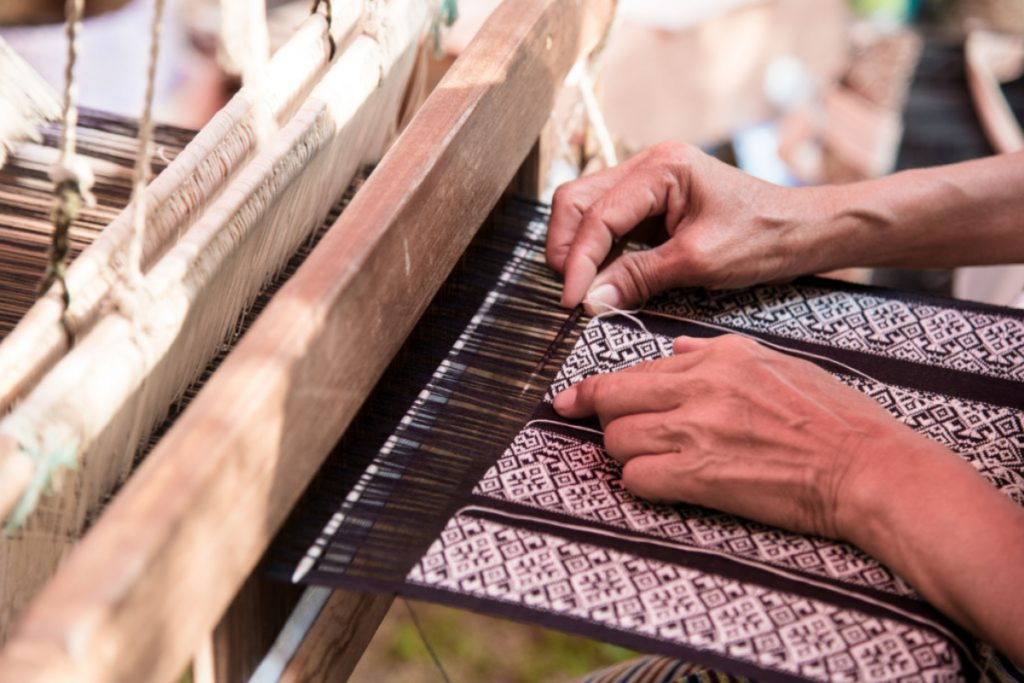
Many rural areas have traditional craft skills that are passed down through generations. These crafts are in high demand in cities and can earn good income if marketed properly.
What You Can Do: Depending on your region, you can make handloom sarees, durries, bamboo products, pottery, wood crafts, tribal jewelry, or any traditional craft of your area. Each region has unique crafts that urban customers love.
Investment Needed: Starting traditional craft business needs 20,000 to 1,00,000 rupees depending on craft type. Money goes into raw materials, tools, and initial samples. Many government schemes provide looms and equipment for free or subsidized rates.
Expected Returns: Monthly earnings can be 15,000 to 60,000 rupees depending on product and sales channels. Direct selling through exhibitions and online platforms gives better margins than selling to middlemen.
Pros:
- Using existing traditional skills
- Government support through schemes
- Growing demand for handmade products
- Work from home
- Preserving cultural heritage
Cons:
- Limited market reach in village
- Competition from cheaper machine made products
- Need to find proper sales channels
- Production time is high per piece
- Raw material availability issues sometimes
How to Start: Master the craft through practice. Join government schemes like PM Vishwakarma Yojana that provide training and loans. Form or join self help groups for better access to resources. Create quality products that can compete in urban markets. Take good photos of products. Register on ecommerce sites for handmade products. Participate in government organized craft fairs. Connect with NGOs working in handicrafts. Keep traditional designs but also try modern variations. Focus on quality to build reputation.
Organic Farming and Products

With growing health awareness, demand for organic vegetables, fruits, and products is increasing fast in cities. If you have agricultural land, organic farming can give you premium prices.
What You Can Do: You can grow organic vegetables, fruits, pulses, or spices. You can also make organic products like cow dung fertilizer, vermicompost, or organic honey. Certification helps get better prices.
Investment Needed: Starting organic farming needs about 50,000 to 2,00,000 rupees depending on land size. Investment goes into organic inputs, certification, and setup. Government provides subsidies for organic farming.
Expected Returns: Organic products get 20 to 50 percent higher prices than regular products. From one acre, you can earn 30,000 to 80,000 rupees per crop cycle. Multiple crops in year increase annual income.
Pros:
- Premium prices for organic products
- Better for health and environment
- Government support and subsidies
- Growing urban demand
- Less chemical costs over time
Cons:
- Initial years have lower yields
- Organic certification takes time
- Need proper marketing to reach urban buyers
- More labor intensive than chemical farming
- Storage and transportation challenges
How to Start: Get training in organic farming methods. Start with small portion of land first. Use natural fertilizers and pest control. Maintain proper records for certification. Get organic certification after transition period. Connect with organic stores in nearby cities. Join farmer producer organizations for better marketing. Sell directly through farmer markets when possible. Use social media to reach health conscious customers. Slowly convert more land to organic.
Government Support for Women Entrepreneurs
The Indian government has created many special schemes to help women start and grow businesses. These schemes provide loans, training, and other support that makes starting a business much easier.
Key Government Schemes
Mudra Yojana: This scheme provides loans up to 10 lakh rupees without any collateral. Women entrepreneurs get special preference. The loan is divided into three categories – Shishu (up to 50,000), Kishore (50,000 to 5 lakhs), and Tarun (5 to 10 lakhs). Interest rates are reasonable and you can apply through any bank.
Stand Up India: This scheme specifically helps women and scheduled caste or tribe entrepreneurs. You can get loans between 10 lakhs to 1 crore rupees for setting up greenfield businesses in manufacturing, services, or trading sectors. At least 51 percent ownership must be with woman entrepreneur.
Startup India: If you have an innovative startup idea, this program provides tax benefits, easy compliance, and access to funding. Women led startups get special consideration. The government has funded 149 women led startups with over 3,100 crore rupees through this program.
Annapurna Scheme: Specially designed for women in food catering business. You can get loans up to 50,000 rupees for buying equipment and setting up your food business. This is perfect for tiffin services and catering businesses.
Credit Guarantee Scheme: This scheme guarantees your loan so you do not need to provide collateral. This makes it much easier to get loans approved from banks without having to pledge property or gold.
How to Apply for Government Schemes
Applying for government schemes is not very difficult. First, visit the nearest bank branch or district industries center. They have detailed information about all schemes. Take documents like Aadhaar card, PAN card, bank account details, and your business plan. Many schemes have online application portals also. Banks prefer detailed business plans that show how you will use the money and repay the loan. Take help from Khadi and Village Industries Commission or district industry offices if needed. They often conduct training programs and help with applications.
Essential Skills Every Woman Entrepreneur Needs
Starting a business needs more than just a good idea. You need some basic skills to run the business successfully. Here are the most important skills you should develop.
Business Planning and Money Management
You need to understand basic accounting and finance. Learn to maintain records of all income and expenses. Understand profit and loss calculations. Know how to price your products to cover costs and make profit. Create monthly budgets. Keep business money separate from personal money. These simple financial skills will help you make better business decisions.
Marketing and Customer Relations
Learn to promote your business through social media. Understand what your customers want and need. Build good relationships with customers so they come back again. Ask for feedback and improve based on what customers say. Learn basic skills of taking good photos for social media. Write clear and attractive descriptions of your products or services. Good marketing does not always need money, creativity matters more.
Time Management and Organization
Running a business while managing home needs good time management. Plan your day properly. Decide business hours and stick to them. Use simple tools like calendars and to do lists. Learn to say no to things that waste time. Involve family in planning so they understand your business needs. Organize your workspace so you can find things quickly. Good organization makes work easier and less stressful.
Problem Solving and Adaptability
Every business faces problems. Learn to stay calm and think of solutions. Be ready to change your plans when needed. If something is not working, try a different approach. Learn from mistakes instead of giving up. Talk to other business owners to learn how they solved similar problems. Being flexible and creative in solving problems is very important for success.
Common Challenges Women Entrepreneurs Face and Solutions
Starting a business is not easy, especially for women in India who face some unique challenges. But every challenge has a solution if you know how to handle it.
Balancing Home and Business
Many women worry about managing home responsibilities along with business. The solution is to plan your time well. Involve family members and explain your business goals. Start with part time business that needs just few hours daily. As you earn money, you can hire help for home or business. Remember that many successful women entrepreneurs started exactly the same way.
Lack of Family Support
Some families do not support women starting businesses. They worry about safety, time, or social opinions. The solution is to start small without disturbing family life. Show results gradually. When family sees you earning money and managing well, they will support you. You can also join women entrepreneur groups where you get emotional support and advice from others facing similar situations.
Limited Capital and Credit Access
Getting loans can be difficult due to lack of collateral or credit history. The solution is to start with businesses that need very low investment. Use government schemes designed for women that do not need collateral. Join self help groups that provide small loans. Build credit history by taking small loans and repaying on time. Many successful businesses started with just few thousand rupees.
Fear of Failure
Many women do not start businesses because they fear failure. The solution is to start very small where failure does not hurt much. Consider it as learning experience. Most successful entrepreneurs failed many times before succeeding. Do proper research and planning to reduce risks. Start part time alongside your current work for safety. Remember that not trying is bigger failure than trying and learning.
Marketing and Technology Challenges
Many women feel they do not know enough about technology or marketing. The solution is simple – learn. There are thousands of free YouTube videos teaching everything about social media marketing, website creation, and online selling. Ask younger family members to help. Join free training programs conducted by government and NGOs. Technology is not as difficult as it seems. Start with basics and learn slowly.
Step by Step Guide to Starting Your Business
If you have decided to start a business, follow these simple steps to begin your journey properly.
Step 1: Choose Right Business Idea
Think about your skills, interests, and available resources. Choose something you enjoy doing. Research if there is demand for that product or service in your area. Talk to potential customers. Start with business that matches your current situation and resources. You can always expand later.
Step 2: Make Simple Business Plan
Write down your business idea clearly. Who are your customers? What will you sell? How much will it cost? How will you reach customers? What prices will you charge? How much profit can you make? Where will you work? This simple plan will help you think clearly about your business.
Step 3: Arrange Money
Calculate exactly how much money you need to start. Look at your savings first. Check government loan schemes. Talk to family members who might lend. Join self help groups. Apply to banks with your business plan. Start small if you cannot arrange all money at once. You can grow as you earn.
Step 4: Get Licenses and Registrations
Check what licenses you need for your business. Food businesses need FSSAI license. Some businesses need GST registration. Get trade license from municipal corporation. Open separate bank account for business. These formalities are important even if your business is small. They make your business legal and build trust.
Step 5: Set Up Your Workspace
Prepare your work area whether at home or outside. Arrange necessary equipment and materials. Make it organized and comfortable. If working from home, create separate space so work and home do not mix completely. Keep workspace clean and professional looking for customer confidence.
Step 6: Start Marketing
Before you even start fully, begin telling people about your business. Create social media pages. Tell friends and family. Print simple business cards. Join local business groups. Offer special rates to first customers in exchange for reviews and referrals. Marketing should start early and continue always.
Step 7: Deliver Quality and Get Feedback
Focus on quality from day one. Happy customers are best marketing. Ask customers what they liked and what can improve. Take suggestions seriously. Make changes based on feedback. Every customer is important in beginning. Their word of mouth will help you grow.
Step 8: Keep Learning and Growing
Business world keeps changing. Keep learning new things. Watch how other businesses work. Attend free training programs. Learn from mistakes. Try new ideas carefully. Grow slowly and steadily. Save and reinvest profits. Celebrate small successes along the way.
Success Stories to Inspire You
Many Indian women have started from very small beginnings and built successful businesses. These stories show that with determination and hard work, anyone can succeed.
Women from rural areas have turned traditional skills into profitable businesses. A woman in Madhya Pradesh started making pickles from her mother’s recipes with just 5,000 rupees investment. Today she supplies to shops across the state and earns over one lakh rupees monthly. Another woman from Maharashtra turned her mehndi application skill into a successful business, now training other women also.
In cities, educated women are using their professional knowledge to start businesses. Former IT professionals are running successful digital marketing agencies. Teachers have created online coaching businesses reaching students across India. Designers have built profitable boutiques and online stores. Homemakers have turned cooking skills into thriving food businesses with thousands of monthly customers.
What makes these women special is not that they had special advantages. Most faced the same challenges you might face – limited capital, family concerns, and self doubt. What they had was determination to succeed, willingness to learn, and courage to start despite fears. They started small, delivered quality, learned from mistakes, and grew steadily. If they can do it, so can you.
Frequently Asked Questions
Which business is best for women in India?
The best business for any woman depends on her skills, interests, available time, and investment capacity. Food related businesses, beauty services, tutoring, and handicrafts are very popular because they need low investment and can be started from home. However, businesses like daycare, event planning, and digital marketing can give higher returns if you have more capital and time to invest. Choose something you enjoy doing and that has demand in your area. Starting with what you are already good at makes success easier.
How much money do I need to start a business as a woman entrepreneur?
You can start a business with as little as 5,000 to 10,000 rupees if you choose the right idea. Online reselling, tutoring, content creation, and some handicrafts need very low investment. Food businesses from home need 20,000 to 50,000 rupees. Beauty services and boutique businesses need 50,000 to 1,50,000 rupees. Bigger businesses like daycare or shops need 2,00,000 rupees or more. Government schemes provide loans without collateral, so you do not need to have all money yourself. Start small with whatever you have and grow with profits.
Can I start a business while managing home and family?
Yes, many successful women entrepreneurs started exactly this way. The key is to choose a business that allows flexible timing. Home based businesses like cooking, tutoring, or online work give you control over your schedule. Start part time initially, working just 2-3 hours daily. Involve family in planning and take their support. Use technology to save time. As business grows and you earn money, you can hire help for home or business tasks. Millions of women successfully balance both with proper planning.
Do I need special education or degree to start a business?
No, you do not need special education or degree for most businesses. What you need is skill in what you want to do and willingness to learn. Many successful women entrepreneurs have only basic school education but excel in their businesses because they have practical skills and determination. However, taking short courses in your field can help you improve and build confidence. There are many free online courses and government training programs. Business success depends more on hard work, quality, and customer service than on degrees.
What are the most profitable business ideas for women with low investment?
Food businesses, especially tiffin services and homemade snacks, give very good returns with profit margins of 40-60 percent. Beauty and makeup services have high earning potential especially during wedding season. Online tutoring needs very low investment but can give steady monthly income. Handmade products like candles and soaps have good profit margins if sold directly. Digital services like social media management have almost no cost except your time and knowledge. The key is to choose something with consistent demand and where you can provide quality.
How do I get customers for my new business?
Start by telling everyone you know about your business. Friends and family will be your first customers. Give them such good quality and service that they tell others. Create social media pages and post regularly with attractive photos. Join local community groups on WhatsApp and Facebook. Participate in local events and markets. Offer special discounts to first few customers in exchange for reviews and photos. Ask satisfied customers to refer you to others. Be consistent and patient. Building customer base takes time but with quality service, customers will come and stay.
What government schemes help women entrepreneurs get loans?
Mudra Yojana provides up to 10 lakh rupees without collateral. Stand Up India gives 10 lakhs to 1 crore rupees for new businesses. Annapurna Scheme helps food business with up to 50,000 rupees. Udyogini Scheme provides subsidized loans to women from economically weak sections. Credit Guarantee Scheme removes the need for collateral making loan approval easier. Prime Minister Employment Generation Programme gives higher subsidies to women. Visit your nearest bank or district industries center to apply for these schemes with your business plan and basic documents.
How can I balance work and personal life as a woman entrepreneur?
Set clear working hours and try to stick to them. Create separate workspace even if at home so you can mentally separate work time. Plan your week in advance so you know when to focus on business and when on family. Learn to say no to things that are not important. Use technology and tools that save time. Involve family members so they understand your business. Take at least one day off weekly for family and yourself. Do not feel guilty about working on your business – you are building better future for family. Many women successfully manage both with clear boundaries.
What are the main challenges women face when starting a business?
The biggest challenges are limited access to capital, lack of family support, fear of failure, and limited knowledge about business and technology. Managing time between home and business is another major concern. Social attitudes and safety concerns sometimes restrict women’s mobility and networking. However, all these challenges can be overcome with proper planning. Government schemes help with capital. Starting small builds confidence. Learning from other women entrepreneurs shows the path. Remember that every successful woman business owner faced similar challenges and overcame them.
What are the main challenges women face when starting a business?
The biggest challenges are limited access to capital, lack of family support, fear of failure, and limited knowledge about business and technology. Managing time between home and business is another major concern. Social attitudes and safety concerns sometimes restrict women’s mobility and networking. However, all these challenges can be overcome with proper planning. Government schemes help with capital. Starting small builds confidence. Learning from other women entrepreneurs shows the path. Remember that every successful woman business owner faced similar challenges and overcame them.
How long does it take for a business to become profitable?
This depends entirely on the type of business and how much time and effort you put in. Service based businesses like tutoring, beauty services, and food delivery can become profitable from the first month itself because costs are low. Product based businesses take 3-6 months to build steady customer base. Bigger investments like daycare or shops typically take 1-2 years to recover investment and become profitable. Having realistic expectations is important. Focus on building quality and customer base in first few months rather than expecting immediate big profits. Steady growth is better than quick money.
Can I get business loan without property or gold as security?
Yes, many government schemes provide loans to women without needing any collateral or security. Mudra Yojana provides up to 10 lakh rupees without any collateral requirement. Credit Guarantee Scheme was specifically created to remove the collateral burden. Stand Up India also provides loans to women without requiring property or gold. Self help groups provide small loans to members without security. The key is to have a clear business plan and show how you will repay the loan from business profits. Start with smaller loans and build credit history.
What skills should I learn before starting a business?
Basic financial skills like maintaining accounts and calculating profit are very important. Learn simple digital marketing through free online courses. Understand your product or service thoroughly. Develop good communication skills to deal with customers and suppliers. Learn basic smartphone skills for social media and online transactions. Time management and organization help you work efficiently. Customer service skills ensure customer satisfaction. You do not need to be expert in everything before starting. You can learn as you grow. Many skills come naturally with experience.
How do I decide the right price for my products or services?
Calculate all your costs including materials, time, packaging, and other expenses. Add a reasonable profit margin, usually 40-60 percent for products and higher for services. Check what competitors are charging for similar products. Consider what your target customers can afford. Price should cover your costs, give you decent profit, and still be attractive to customers. You can start with lower prices initially to attract customers, but do not undersell yourself too much. As you build reputation, you can gradually increase prices. Always be clear about value you provide.
Can I run an online business from home?
Yes, many successful businesses run completely online from home. Online tutoring, digital marketing, content creation, online reselling, graphic design, virtual assistance, and many other services can be done entirely online. You need just a laptop or good smartphone, reliable internet connection, and relevant skills. Online businesses have advantages like low investment, flexible timing, and ability to reach customers anywhere in India or even abroad. Create professional social media presence and website. Build trust through quality work and good reviews. Many women successfully run profitable online businesses from home.
What should I do if my business is not making money initially?
Do not panic or give up immediately. Most businesses take time to build customer base and become profitable. Analyze what is working and what is not. Talk to customers to understand their needs better. Check if your pricing is right. Look at your marketing – are you reaching right customers? Try different approaches. Reduce unnecessary costs. Ask experienced entrepreneurs for advice. Keep some savings or income source to support yourself during initial months. Learn from mistakes and improve. Many successful businesses struggled initially but succeeded with persistence and smart changes.
Conclusion
Starting a business is one of the best decisions you can make for your future. For women in India today, there are countless opportunities in every field. Whether you have 5,000 rupees or 5 lakh rupees, whether you live in a village or a city, whether you have degree or traditional skills, there is a business idea perfect for you.
The most important things are not money or education. What matters most is your determination to succeed, willingness to work hard, and courage to start despite fears. Every successful woman entrepreneur was once where you are now – thinking about starting but unsure. The difference is they took that first step.
Remember to start small, focus on quality, learn continuously, and grow steadily. Do not compare your beginning with someone else’s middle. Build your business at your own pace. Involve your family, use government support, learn from others, but create your own path.
The journey of entrepreneurship will have challenges, but it will also give you freedom, confidence, and satisfaction that comes from building something of your own. Your business can change not just your life but also lives of your family members and employees you might hire later.
Take that first step today. Choose a business idea, make a simple plan, and start. India needs more women entrepreneurs like you who can inspire and lead. Your success story can motivate thousands of other women to start their own businesses. The best time to start was yesterday. The next best time is today. All the best for your entrepreneurial journey.